Tumor research, Immunotherapy, drug screening
PD-L1 & 4-1BB (2)
PD-L1 & 4-1BB (2)
Nomenclature
C57BL/6 - Cd274em1(hPD-L1)Tnfrsf9tm2(hTNFRSF9)/IL
Cat. NO.ILHU-200260
Strain StateEmbryo
Gene Summary:
| Synonyms | B7h1, Pdl1, Pdcd1l1, Pdcd1lg1, A530045L16Rik, ILA, Ly63, 4-1BB, Cd137, CDw137, AA408498, AI325004, A930040I11Rik |
| NCBI ID | 60533, 18566 |
| MGI ID | 1926446, 104879 |
| Ensembl ID | ENSMUSG00000016496, ENSMUSG00000028965 |
| Human Orthologs | CD274, TNFRSF9 |
Research Application:
Description:
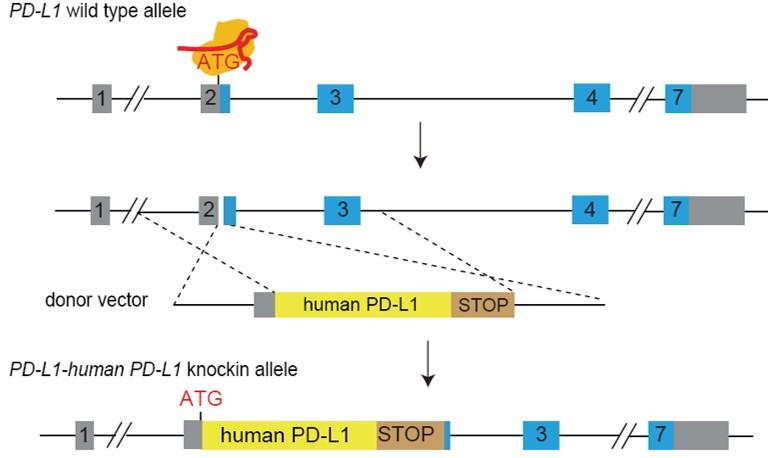
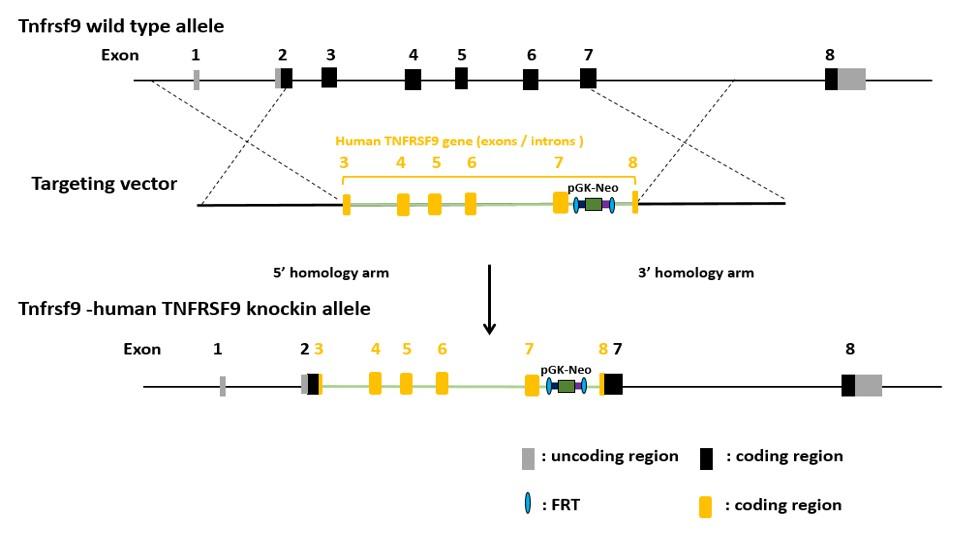
Humanized Strategy
PD-L1 Humanization Strategy
4-1BB (2) Humanization Strategy
Validation Data: PD-L1
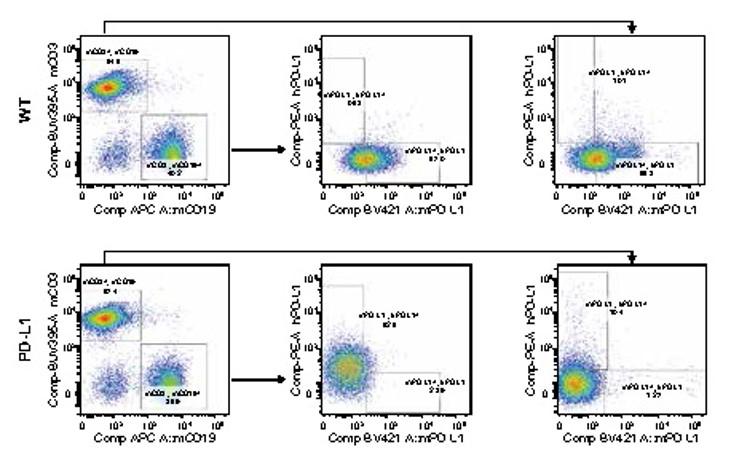
Figure 1. Expression of PD-L1 in the spleen lymphocytes collected from homozygous humanized PD-L1 mice and wild-type mice is detected by FACS. The results showed that the expression of human PD-L1 can be detected in both T cells and B cells collected from the spleen of homozygous humanized PD-L1 mice. (Data in partnership with collaborators)
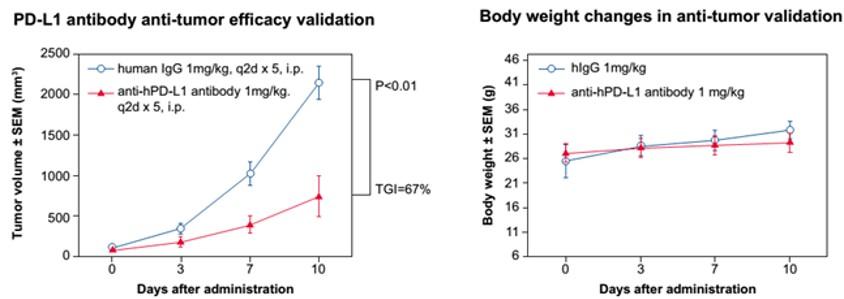
Figure 2. In vivo validation of anti-tumor efficacy in a MC38 tumor-bearing model of humanized PD-L1 mice. Homozygous humanized PD-L1 mice were inoculated with MC38 colon cancer cells (expressing human PDL1 rather than murine PD-L1). After the tumors grew to 100 mm3, the animals were randomly assigned into a control group and a treatment group (n=5). The results showed: The antibodies targeting human PD-L1 were associated with a very significant anti-tumor effect (TGI: tumor growth inhibition, p <, 0.001), demonstrating that the humanized PD-L1 mice are a good in vivo model for validating the efficacy of antibodies targeting human PD-L1.
Validation Data: 4-1BB (2)
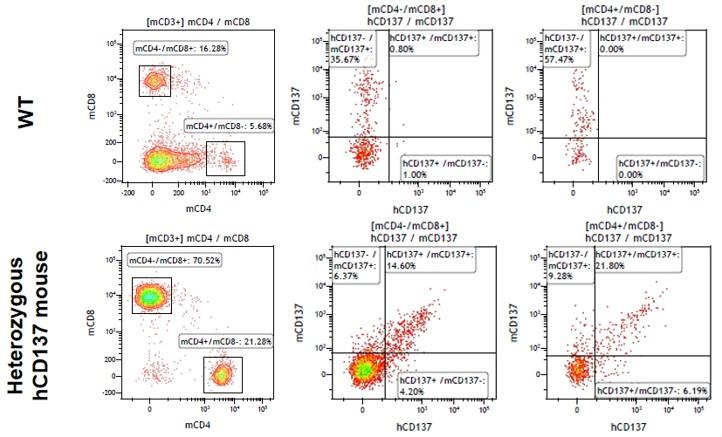
Figure 3. Expression of humanized CD137(4-1BB) in the activated spleen lymphocytes of heterozygous humanized 4-1BB mice is detected by FACS.
The spleen lymphocytes of heterozygous humanized 4-1BB mice were activated by anti-CD3 and anti-CD28 for 48 hours, and then collected for staining. The expression of humanized 4-1BB was detected by FACS. The results showed that the active expression of humanized 4-1BB can be detected in both activated CD4+ and CD8+ T lymphocytes collected from heterozygous humanized 4-1BB mice. (Data in partnership with collaborators)
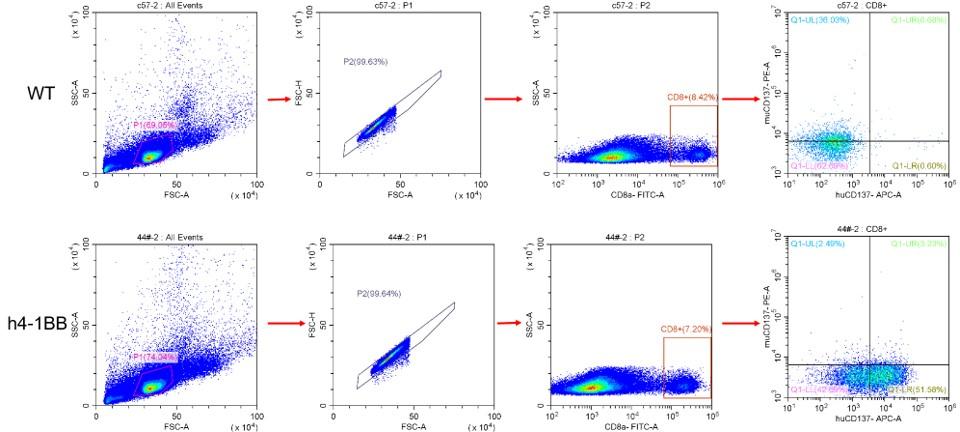
Figure 4. Analysis of human 4-1BB (CD137) expression in the spleen by FACS. The homozygous KI mouse expresses human 4-1BB on the CD8+ T cells.
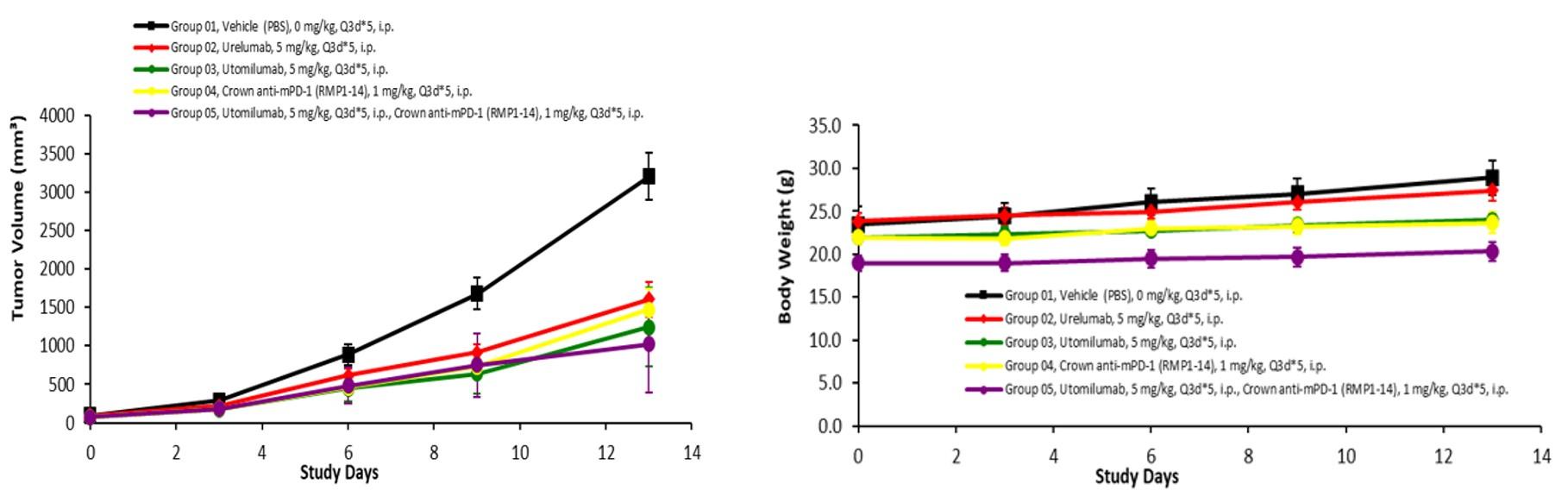
Figure 5. In vivo validation of humanized 4-1BB mice. Humanized 4-1BB mice were inoculated with MC38 colon cancer cells, and were randomly assigned into different groups (n=6) when the tumors grew to a volume of 100 mm3. Human-specific, 4-1BB antibody (Urelumab or Utomilumab) was given every three days (Q3D) for two weeks (Data in partnership with collaborators).