Immunotherapy, cancer research, drug screening
PD-1 & TIM3
PD-1 & TIM3
Nomenclature
C57BL/6 - Pdcd1em1(hPDCD1)Havcr2em1(hHAVCR2)/IL
Cat. NO.ILHU-00103
Strain StateEmbryo
Gene Summary:
| Synonyms | PD-1, Pdc1, Ly101, Tim3, TIM-3, Timd3 |
| NCBI ID | 18566, 171285 |
| MGI ID | 104879, 2159682 |
| Ensembl ID | ENSMUSG00000026285, ENSMUSG00000020399 |
| Human Orthologs | PDCD1, HAVCR2 |
Research Application:
Description:
PD-1 Knock-in Strategy
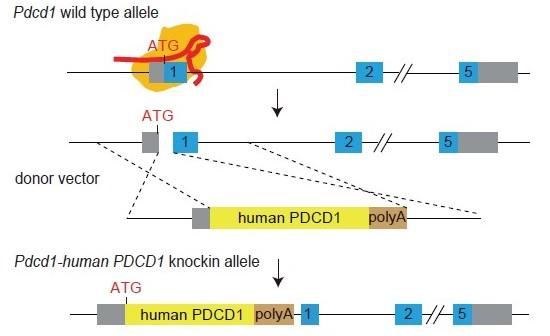
Figure 1. Gene knock-in strategy to engineer a humanized PD-1 (PD-1-HU) mouse model. The endogenous mouse Pdcd1 gene was replaced by insertion of the full length protein coding sequence for the human PDCD1 (PD-1) gene into the ATG position of mPdcd1, followed by a transcription terminator signal (polyA).
Human PD-1 mRNA and Protein Validation
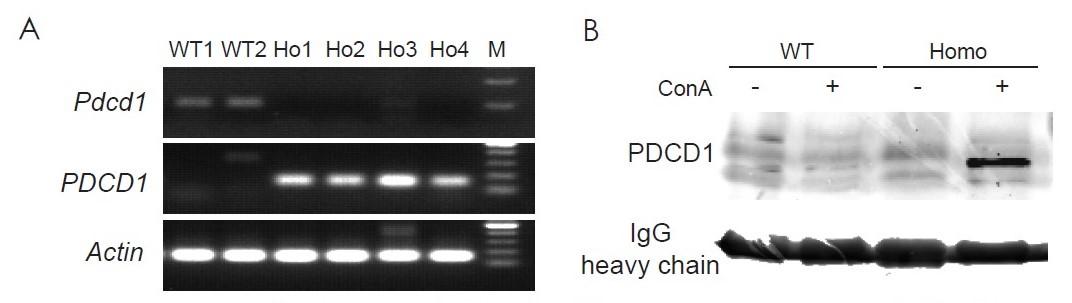
Figure 2. The humanized PD-1 mouse model (PD-1-HU) expresses human PDCD1 (PD-1) gene but not the mouse Pdcd1. Human PD-1 mRNA and protein expression was determined by qPCR (A) and Western Blot (B). A. the wildtype C57BL/6 mice (WT) expressed mouse Pdcd1 mRNA but not human PDCD1, while the humanized PD-1 (homozygous) mice showed expression of the human version of the PD-1 gene. (B) Human PD-1 expression was expressed only in homozygous, humanized PD-1 mice, after concavalin A (ConA) activation.
Human PD-1 Expression in Spleen T Cells After Stimulation
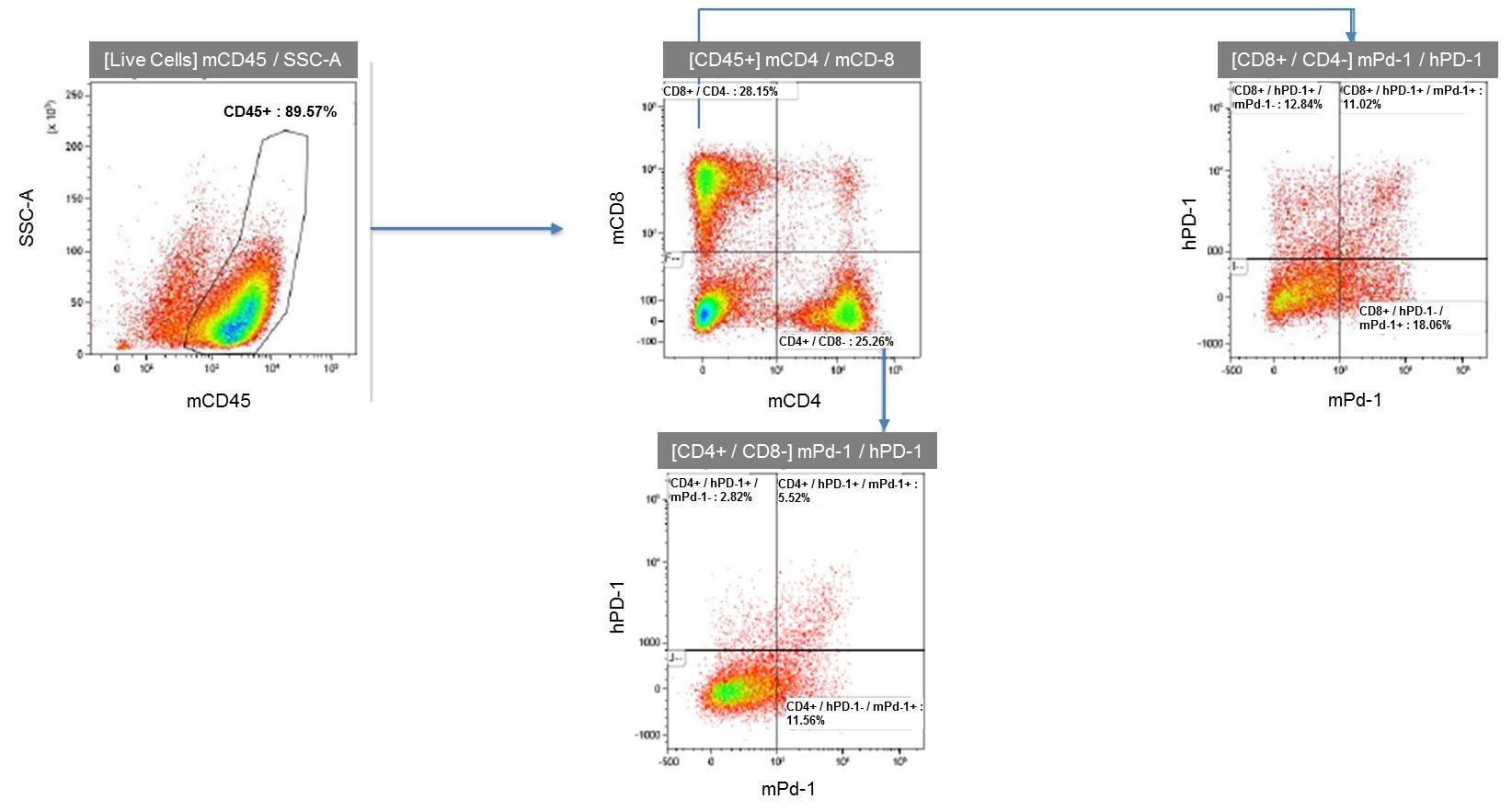
Figure 3. Flow cytometry analysis of activated spleen lymphocytes from humanized PD-1 homozygous mice shows expression of human PD-1.
In Vivo Validation of PD-1-HU Mouse Model in MC38 Colon Cancer Cell Line
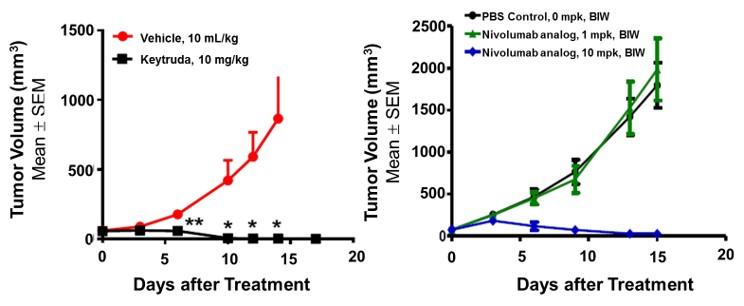
Figure 4. In vivo validation of the anti-tumor efficacy of immune checkpoint inhibitors, Keytruda and a Nivolumab analog in a MC38 tumor-bearing humanized PD-1 mouse model. Homozygous humanized PD-1 mice were inoculated with MC38 colon cancer cells. After the tumors grew to 100 mm3, the animals were randomly assigned to control and treatment groups (N=8). The drugs were given according to standard procedures established in the lab. The results showed a significant dose-dependent anti-tumor effect of the monoclonal antibodies targeting human PD-1 in this humanized mouse model demonstrating that the PD-1-HU humanized mouse model is an ideal in vivo ,model for validating efficacy of immunotherapies targeting human PD-1. Values are Mean ±, SEM of tumor volume. ,
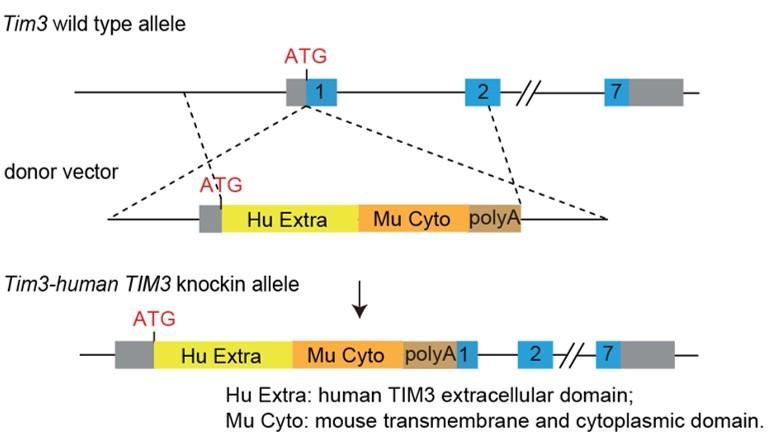
TIM3 Knock-in Strategy
FACS Analysis of Human TIM3 Expression on Stimulated Mouse T Cells
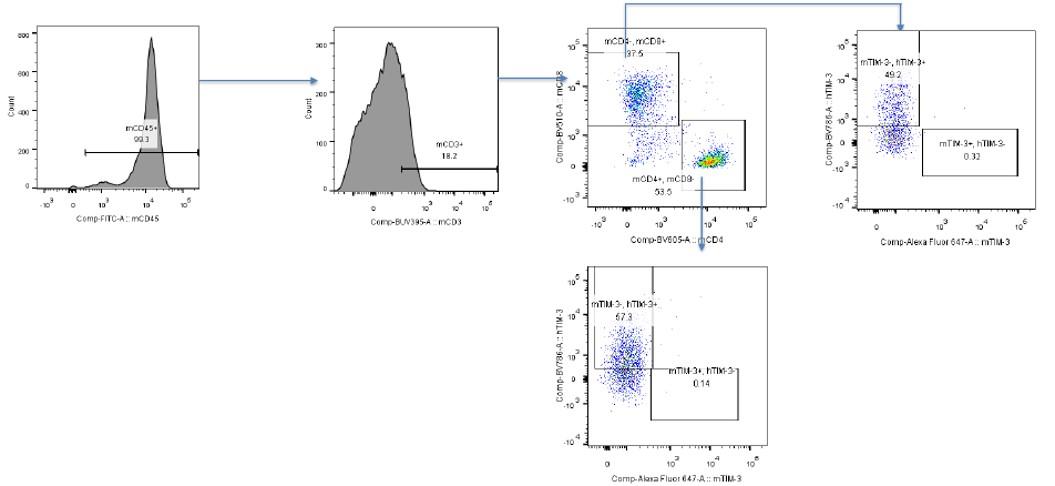
Data in partnership with collaborators