Immunotherapy, cancer research, drug screening
PD-L1 & CTLA4
PD-L1 & CTLA4
Nomenclature
C57BL/6-Ctla4em1(hCTLA4)Cd274em1(hPD - L1)/IL
Cat. NO.ILHU-00102
Strain StateEmbryo
Gene Summary:
| Synonyms | B7h1, Pdl1, Pdcd1l1, Pdcd1lg1, A530045L16Rik, Cd152, Ly-56, Ctla-4 |
| NCBI ID | 12477, 60533 |
| MGI ID | 88556, 1926446 |
| Ensembl ID | ENSMUSG00000026011, ENSMUSG00000016496 |
| Human Orthologs | CTLA4, CD274 |
Research Application:
Description:
Generation Strategy
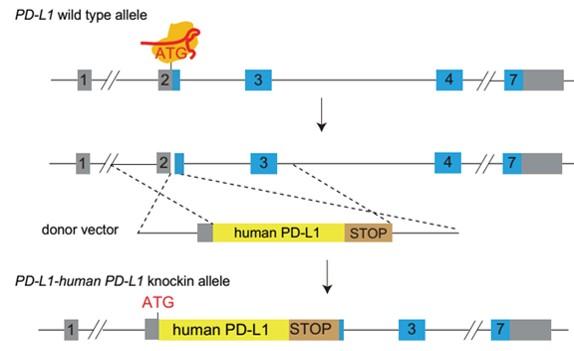
Strategy for Generating Humanized PD-L1 (ASHU-00062) Mouse Model
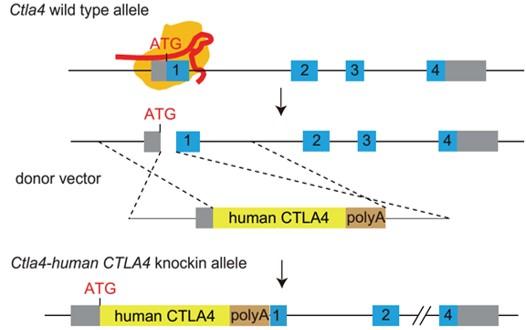
Strategy for Generating Humanized CTLA4 (ASHU-00014) Mouse Model
Validation Data
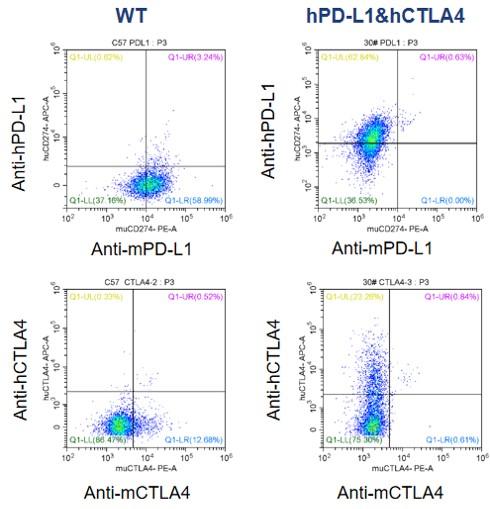
Figure 1. Splenocytes from homozygous hPD-L1/hCTLA4 mice were analyzed by flow cytometry after activation. The murine Pd-l1 (mPD-L1) and Ctla4 (mCTLA4) positive cells were detectable in wild type (WT) C57BL/6 mice, while the human (hPD-L1) and human (hCTLA4) positive cells were detectable in the homozygous hCTLA4/hPD-L1 mice.
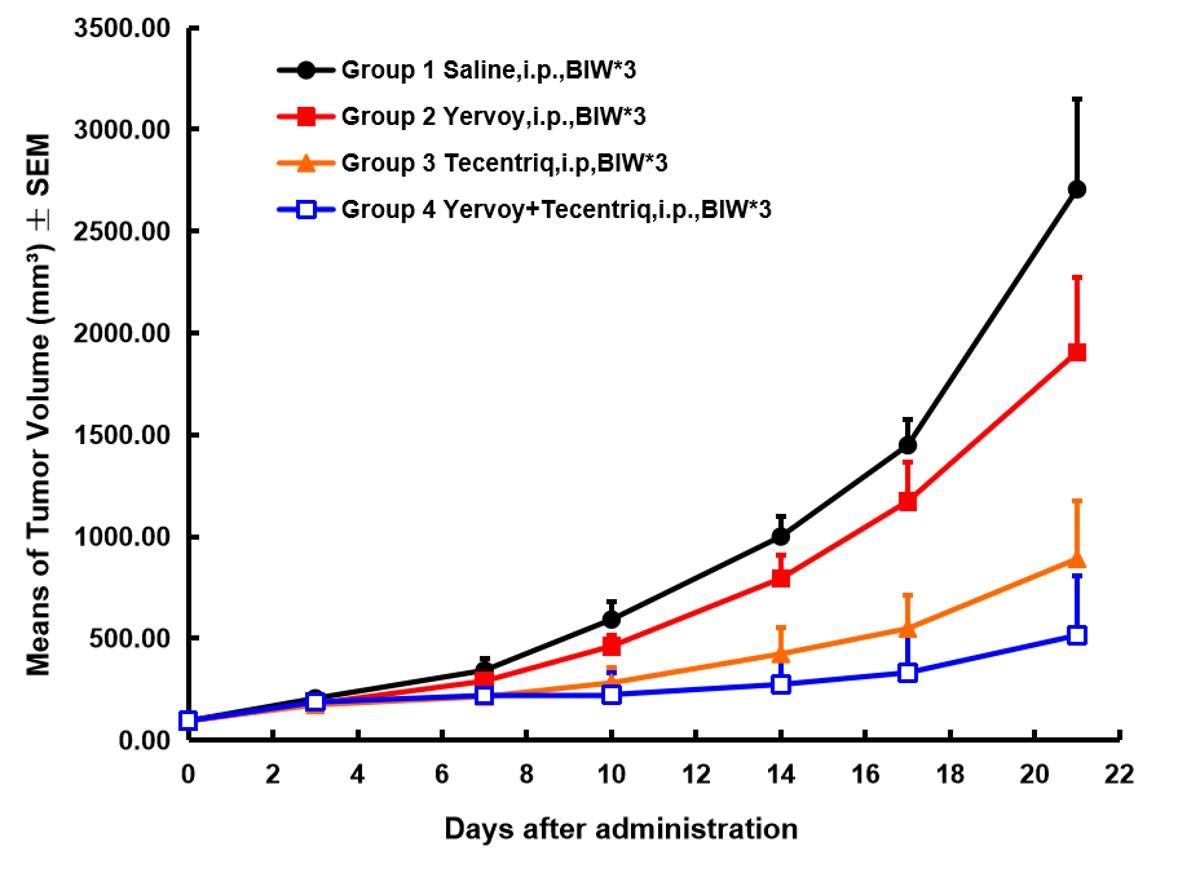
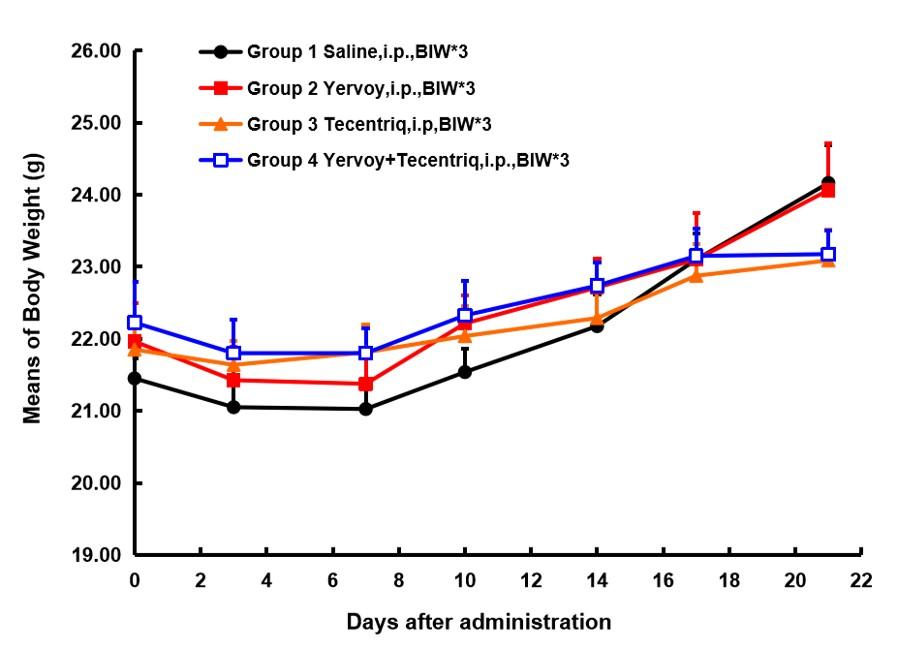
Figure 2. hCTLA-4/PD-L1 mice+ MC38 cells efficacy studies. We have developed a CTLA-4/PD-L1 dKI humanized model and tested the combined treatment of Yervoy and Tecentriq, and then observed improved efficacy in the combination treatment.