Immunotherapy, cancer research, drug screening
PCSK9
PCSK9
Nomenclature
C57BL/6 - Pcsk9em2(hPCSK9)/IL
Cat. NO.ILHU-00075
Strain StateLive
Gene Summary:
| Synonyms | AI415265, AI747682, FH3, HCHOLA3, Narc1, PC9 |
| NCBI ID | 100102 |
| MGI ID | 2140260 |
| Ensembl ID | ENSMUSG00000044254 |
| Human Orthologs | PCSK9 |
Research Application:
Description:
Generation Strategy
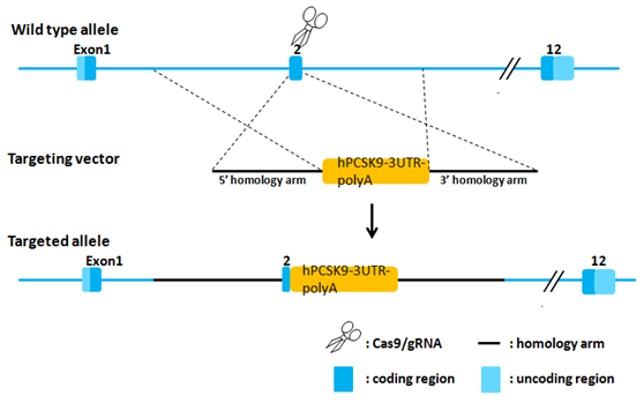
Figure 1. The humanized PCSK9 mice were developed on the C57BL/6 background. The signal ,peptide of murine Pcsk9 was retained, while the rest of the mouse gene was replaced by its human counterpart.
Validation of hPCSK9 Expression in Homozygous Humanized PCSK9 Mice by ELISA
Figure 2. Expression of PCSK9 in the serum of humanized PCSK9 homozygous mice is detected by ELISA. A. The expression of human PCSK9 (huPCSK9) was detected in the serum ,collected from the homozygous, humanized mice. B. The expression of mouse Pcsk9 (muPCSK9) was not detected in the serum ,collected from homozygous, humanized PCSK9 mice. PCSK9: Proprotein convertase subtilisin/kexin type 9 protein
In Vivo Validation of hPCSK9 Expression in Homozygous Humanized PCSK9 Mice by ELISA
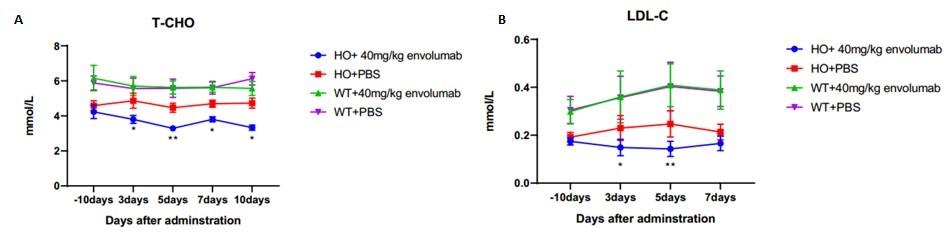
Figure 3. Impact of evolocumab treatment on cholesterol (CHO) and low-density lipoprotein cholesterol (LDL-C) levels in the humanized PCSK9 homozygous mice. A single intravenous injection of evolocumab reduced CHO (A) and LDL-C (B) in humanized PCSK9 homozygous mice after a 16-weeks high-fat diet. Average + SD, n = 6 to 7 mice per condition, *p<,0.05, **p<,0.01, (Student&rsquo,s T-test).